


Is it my imagination or have I finally found something worth living for?
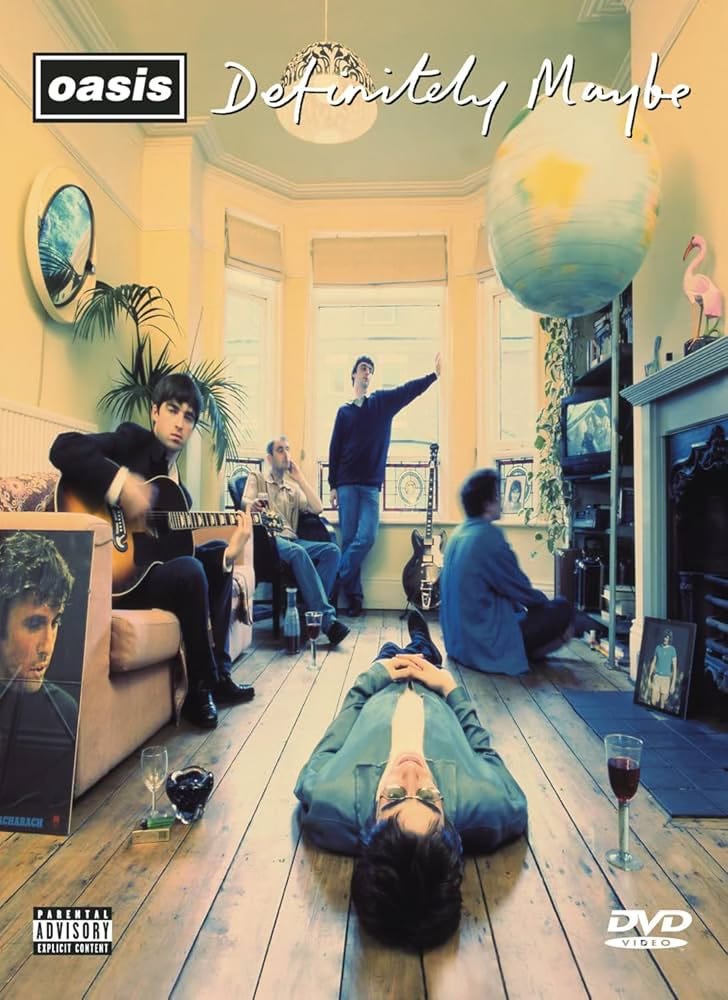
So goes the first line of Mancunian rock band Oasis’s iconic 1994 track, Cigarettes and Alcohol.
According to Genius.com, when songwriter Noel Gallagher uses the word “action” to describe what he is looking for in the song’s first verse, he is referring to “excitement and activity in general.”
Since nothing was happening in the suburbs Noel grew up in, apart from one thing, there was only that one thing to do — go out and try to pick up birds (girls) while getting wasted.
In other words, in the absence of anything truly meaningful to devote his life to, Noel resolves that cigarettes and alcohol might just have to do. Later on, he poses the question: “Is it worth the aggravation to find yourself a job when there’s nothing worth working for?” And once again, his query leads him back to — say it with me — cigarettes and alcohol.
It is a depressing conclusion, to say the least. Sadly, though, it is hardly an uncommon one.
I wrote last week about the online influencer known as Clavicular and juxtaposed his worldview — one centred around what he and many others refer to as “looksmaxxing” — with what I believe to be much closer to the Christian Way, i.e., a lifestyle infinitely more preoccupied with servicemaxxing (if you will) than it is with “statusmaxxing.”
What I did not fully realize until I revisited Clavicular’s two-and-a-half hour sit-down with conservative political commentator Michael Knowles is that his obsession with self-improvement is firmly rooted in a sense of nihilism not too dissimilar from Noel Gallagher’s in Cigarettes and Alcohol thirty odd years ago.
He believes that the world is going to hell in a handbasket (difficult to argue against if you just turn on the news). In his estimation, there is no point in trying to stop it from deteriorating any further—whether through political organizing or otherwise. As my generation is fond of saying, “we’re cooked.”
In a world where we are collectively cooked, then, it seems to him that the only thing worth doing is to maximize one’s own individual experience while it lasts. “Who’s saying don’t be a degenerate?” he inquires.
Michael Knowles responds by describing Clavicular’s ideology as “kind of doomer.” Clavicular does not disagree but sees no other way forward. In fact, he reveals that he identifies as an “accelerationist.” Knowles hears him out and offers up the following paraphrase by way of clarification:
We got all these social problems and things are getting even worse, and so you know what? Let’s just immanentize the eschaton, let’s bring it up to the end, let it all fall apart, and then we can finally rebuild something good.
Clavicular’s reaction? A matter-of-fact “yeah.”
How great the chasm that lies between his worldview and Christianity.
IJ Makan wrote a couple of weeks ago that “philosophy without theology is nihilistic” and I could not agree more.
His post reminded me of a course I took — and failed, and almost failed again mind you — when I was a student at Trinity Western University. It was a theatre history course which contained a lecture on “Theatre of the Absurd” that dealt rather comprehensibly with the concept of nihilism.
According to the lecture, nihilism is the belief that “life has no meaning”—an assertion that is echoed by John Seel, Ph.D. in a recent essay entitled “Beyond the Culture of Nihilism”:
Meaning has thinned. Institutions have weakened. Identity has become weightless and self-invented. Extreme violence is daily news. Reality itself is contested.

It is easy to become blackpilled in such a world. According to KnowYourMeme.com, to be “blackpilled” is to subscribe to “a set of beliefs [characterized by] nihilism, fatalism and defeatism.” While Clavicular embraces this posture, Knowles stands vehemently opposed to it.
He is inspired by twentieth century Spaniards who fought against communists “who were raping nuns and killing priests, who would have given the Soviet Union a major foothold in Western Europe.” According to him:
[These communists] got stopped because people weren’t huge blackpilled doomers, and thought they could actually do something, and indeed prayed to God — by the way — for grace to overcome daunting odds.
Knowles’s appreciation for Francisco Franco aside, I believe he has the right idea.
I am reminded of a Nathan Finochio sermon which makes the best case for a hopeful, Christian engagement with our decaying world that I have ever heard.

Expanding upon Christ’s statement in the Sermon on the Mount that His followers are the “salt of the earth” (Matthew 5:13), Nathan writes that, in Jesus’s day, “salt wasn’t just seasoning—it was the only preservative.”
You covered meat in salt to stop it from rotting.
That’s the point: the world is decaying. And left alone, it decays faster.
Look at societies with no Church—cruel, lawless, sickening… But historically? The Church made the world better in every way:
Hospitals.
Universities.
Scientific breakthroughs.
The arts.
Abolition of slavery.
Women’s suffrage.
Civil rights.
Salt preserves. And when Christians stop preserving? The rot accelerates. Even Christians grow hopeless.
So, instead of accelerating the end of the world, Christians are called to be a people which proclaims — even as it awaits the New Heaven and the New Earth — “Your kingdom come, Your will be done on earth as it is in heaven.”
As Dorothy Day once said:
No one has the right to sit down and feel hopeless. There is too much work to do.