


I had the pleasure of sitting down last week with yet another dear friend/former TWU Discipleship colleague of mine for what we originally thought would be a conversation about his journey towards Christianity. Our conversation ended up covering considerably different ground than we had anticipated, although I highly recommend you check out his podcast for a deeper dive into the beginnings of his vibrant relationship with God.
My use of the word “vibrant” to describe Brandon’s relationship with God is certainly intentional. Ever since I first got to know him on a student leadership retreat in the summer of 2022, I have been repeatedly blown away by his heartfelt and devoted pursuit of the triune God. Lest you think that his spiritual life is purely emotional, however, let me underline that his theological prowess is a force to be reckoned with in its own right. In addition to writing the Linear Love blog, he is also currently enrolled in his second year of ACTS Seminaries’ Master of Divinity program.
An area of interest that he has been studying more intentionally lately is the nature of God’s love towards human beings. As part of his research into the subject, he has been asking his friends to describe on a scale of 1 to 10 the degree to which they affirm that the divine statement “You are my beloved and with you I am well pleased” (see Luke 3:22) is true of them. He has also been asking them to describe the degree to which they affirm the statement in the moments directly after they sin against God. Brandon tells me that almost nobody has answered both questions with a 10.
“And yet,” he laments, “‘We love because He first loved us,’ so if we don’t understand how much we’ve been loved by God, then how the heck are we supposed to love other people? I feel like it’s pretty important.”
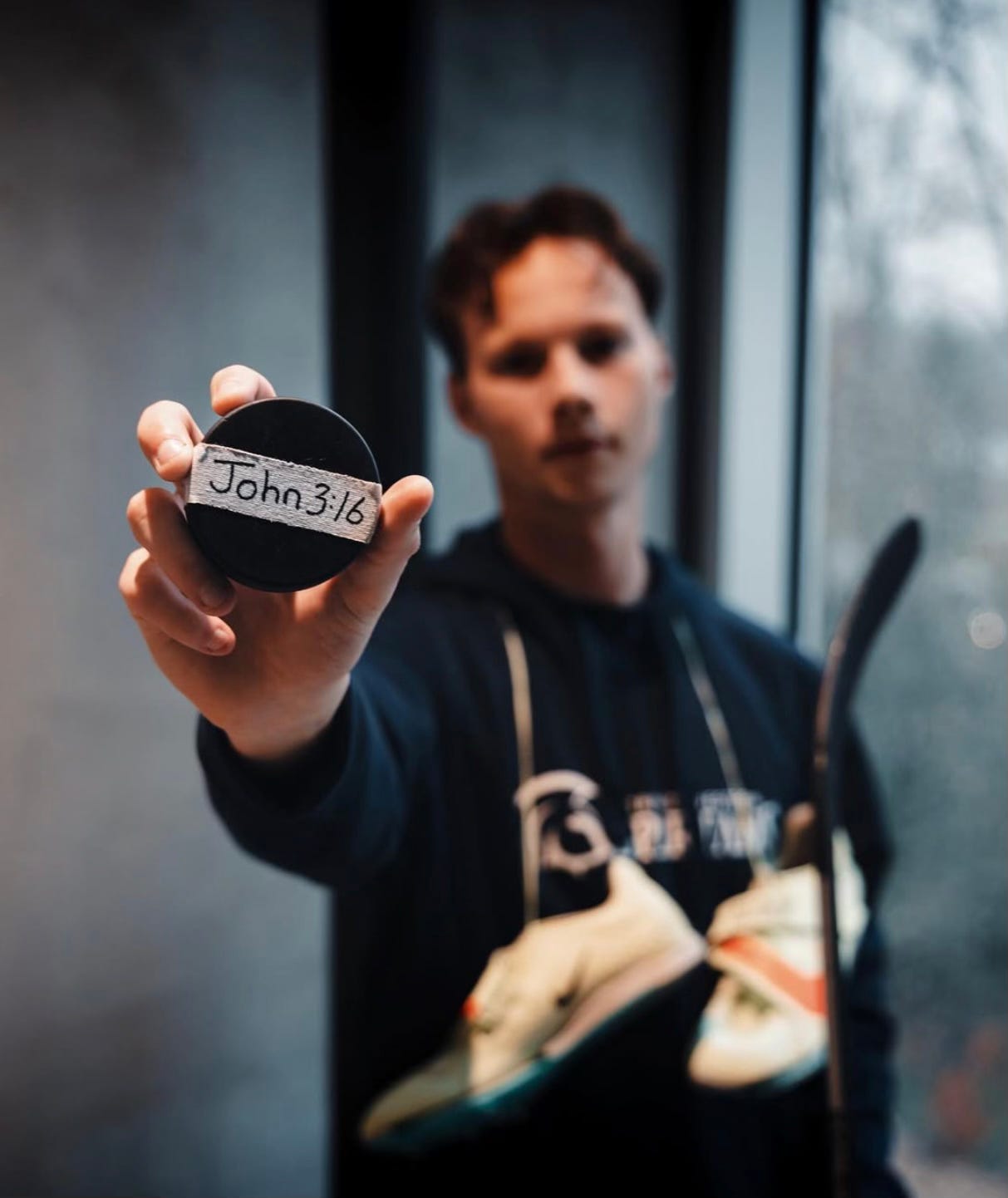
It is a joy to hear the way that Brandon describes his own encounters with the love of God. He is a firm believer that because there are three persons in the Trinity, “we can actually get to know each one distinctly.” He recalls, for example, the night of July 15, 2021 when he fell prostrate before God and recommitted his life to Him, before hearing the distinct voice of Jesus impress upon his spirit that He wanted to wash Brandon’s feet just as He washed the Apostles’ feet in John 13. “That was the night that my life was changed and I encountered Jesus,” Brandon remembers.
I scrolled all the way down to his very first blogpost — written in the immediate aftermath of this landmark encounter with his Lord and Saviour — to discover how he conceived of it at the time. What I found did not disappoint:
All these sins taken upon him, the punishment and righteous justice of the Father towards us was borne by him.
Why?
That reason I cannot fathom, it is incomprehensible the love that Jesus has for me. How could he love me that much to be able to have nails driven into the bone of his hands and feet, to have a crown of thorns pierce his brow and to be jeered at and rejected by the very world he created and to say, “Lord forgive them for they know not what they are doing.”
Jesus paid it all for me. The wages for my sin had strung me into a debt I could never pay, but I don’t have to, for Jesus took all my wages… I am in disbelief and wonder at the love Jesus could have for me. How can this love be true? Yet, I recall that I can believe the entire Bible to be true, and to be a living word that is useful for all teaching, rebuking and reprimanding.
What a beautiful articulation of the Gospel! Every Christian can point to those mountaintop experiences — such as July 15, 2021 in Brandon’s case — where the veil is lifted and we can see Christ face to face for the first time, or for the first time in a long time. Those moments are indeed priceless. But Brandon argues that the best of the Christian life can be experienced as much in the mundane as it can on the mountaintops.
“I’ve been thinking a lot about how Enoch just ‘walked with God and then he was no more,’” he tells me. “What does walking with God look like?” he asks before submitting his theory of the case:
There’s a friendship level to it for sure where you’re just talking about life and making jokes and I think we can often forget that. God actually wants friendship with us. That’s actually what he paid for: relationship. To be able to walk with us like he walked with Adam in the garden.
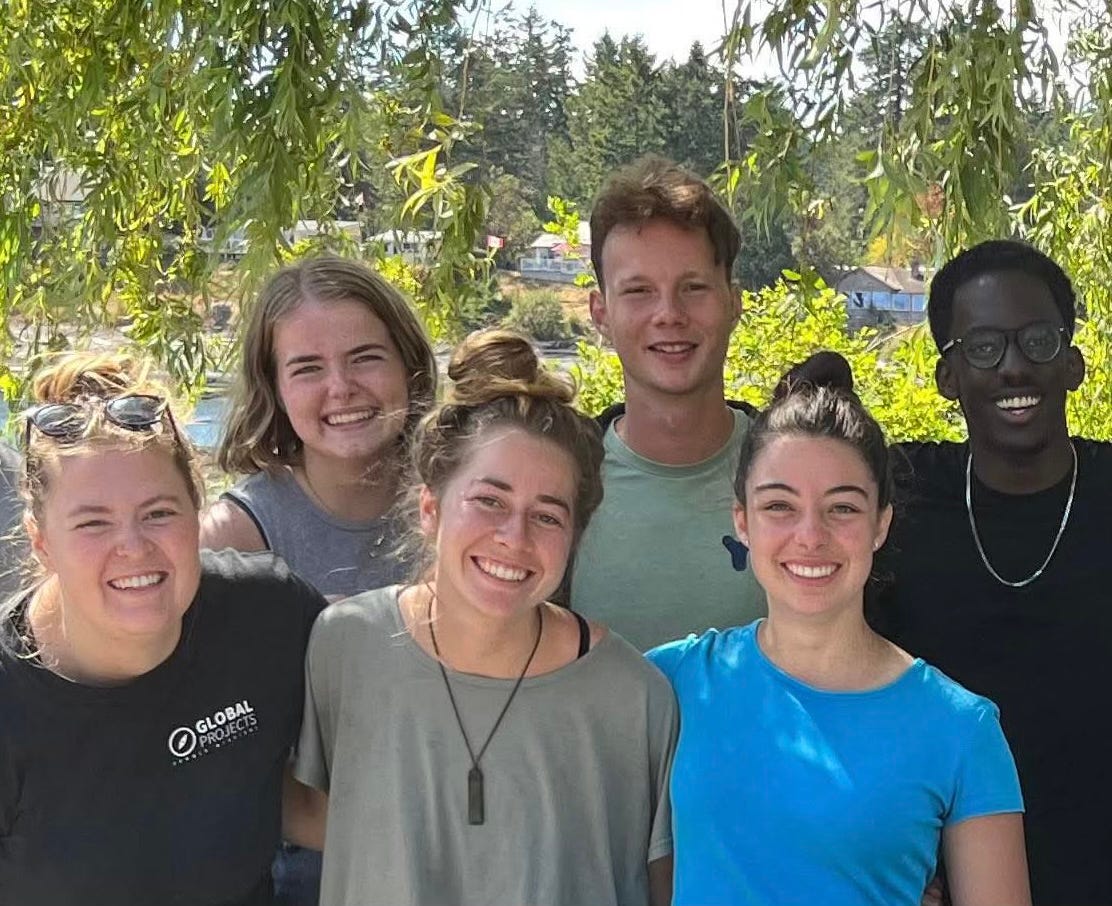
To be clear, Brandon is not afraid to make requests of God in prayer either. One touching testimony he shared with me of recently answered prayer began and ended in the very same place.
“Over my time at Trinity,” he explains, “I wouldn’t be surprised if I’ve spent like 30, 40 hours praying at that picnic bench where the outdoor amphitheatre is now located.” As an undergraduate student in particular, Brandon would routinely grab his penny board late at night and skate over to the picnic bench that would quickly turn into his favourite prayer spot on campus. “I’d just talk with God about everything and anything and part of that prayer was for revival too, and that God might use me for revival in some way,” he remembers.
Fast forward a handful of years to the summer of 2025 and Brandon was back at the same location — this time in his capacity as a YoungLife leader — to give a “club talk” wherein he would go on to present the Gospel to dozens of unchurched teenagers. “That was a full circle moment,” he remembers fondly before adding the following:
After that moment, I just felt like God was saying, “Brandon, you don’t understand what those hours you spent praying in this place have done to cultivate this moment.” And for me, that was really encouraging — like if I pray for something persistently, it could actually change reality.
In the words of Jesus Christ, “If in my name you ask me for anything, I will do it” (John 14:14 NRSV).
To wrap up our conversation, I asked Brandon if there was anything on his heart he felt led to share with Zoomed In readers on the subject of prayer. He responded in the affirmative and began to describe an analogy that has meant a lot to him in recent weeks. “As an iceberg goes much deeper below the surface than it rises above,” he explains, “so too a biblical leader’s prayer life must be equal to — or of greater magnitude than — their public ministry.”
In light of this profound reality, Brandon’s challenge to himself in this season is to “enlarge” the invisible part of the iceberg that is his ministry such that the magnitude of his private prayer life will sustain the good works God has called him to do in public. I, for one, would do well to adopt the same challenge for myself.