


Yesterday was the day known as Christ the King Sunday in the liturgical calendars of numerous Christian groups, including Roman Catholics and Anglicans. Instituted by Pope Pius XI exactly a hundred years ago, the purpose of the celebration is to ground the Christian year in the reality that Christ is king over all of history as we come to the end of one liturgical year and look forward to the next — the beginning of which is celebrated through the Advent season between now and Christmas.
My friend Jared Sumner issued a timely challenge to myself and other parishioners at Emmaus Road Anglican Church when he asked us yesterday morning to consider whether Christ does indeed reign over every aspect of our lives. His question reminded me of the fourth chapter of legendary minister and theologian Timothy Keller’s book, Hidden Christmas.
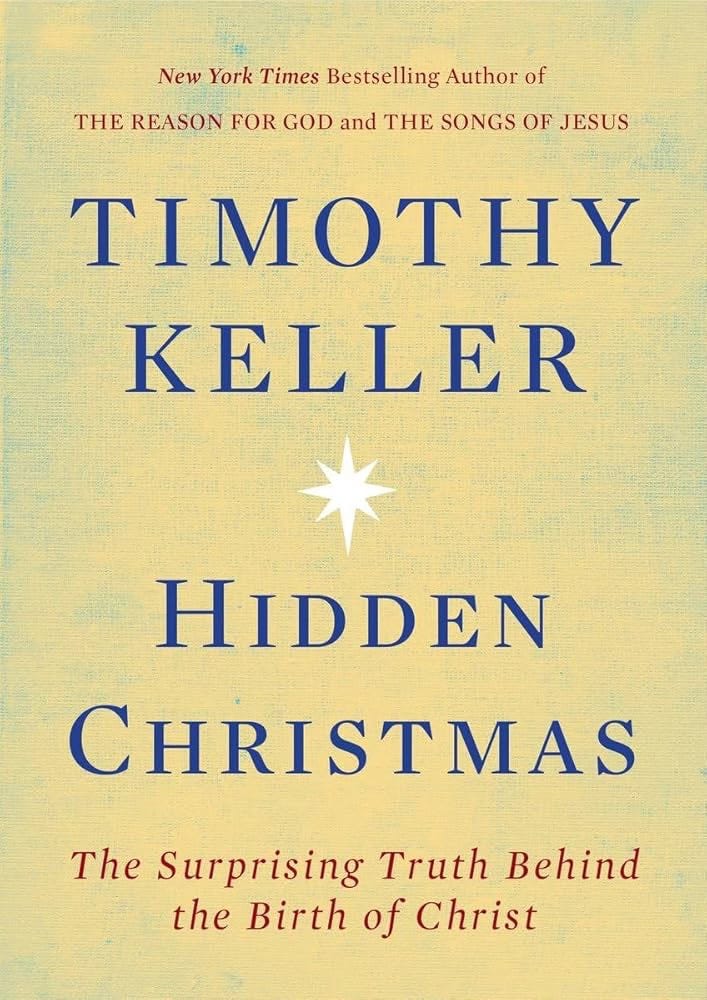
In the chapter, Keller argues that there is a King Herod inside every human being, i.e., a part of each one of us which is marked by a dogged resistance to the Lordship of Jesus Christ. In the story of Jesus’s early days on earth as told by the Evangelist Matthew, King Herod finds out from visitors to Jerusalem that a child “has been born king of the Jews” (Matthew 2:2) somewhere in Israel. Herod tries to find the child but eventually proceeds to exterminate “all the children in and around Bethlehem who were two years old or under” instead (v.16).
Clearly, Herod was a vile and gruesome tyrant. I highly doubt that anyone reading this blog possesses the kind of vengeful and murderous animus that drove him. However, I also believe — like Timothy Keller — that each of us is prone to be threatened by the logical conclusions of Jesus’s identity and mission on the earth. If Jesus is indeed who He said He was, then He is worthy of our everything; worthy of our complete devotion and obedience as we seek to follow Him every day of our lives. “Let the same mind be in you that was in Christ Jesus,” the Apostle Paul urges us in Philippians 2,
who, though he existed in the form of God,
did not regard equality with God
as something to be grasped,
but emptied himself,
taking the form of a slave,
assuming human likeness.
And being found in appearance as a human,
he humbled himself
and became obedient to the point of death—
even death on a cross.
Therefore God exalted him even more highly
and gave him the name
that is above every other name,
so that at the name given to Jesus
every knee should bend,
in heaven and on earth and under the earth,
and every tongue should confess
that Jesus Christ is Lord,
to the glory of God the Father.
Our “reasonable act of worship” in light of this reality is to “present [our] bodies” to Jesus “as a living sacrifice, holy and acceptable to God” (Romans 12:1). It is our reasonable act of worship to consecrate our whole selves to God if Jesus did indeed take on human flesh to redeem and restore the world through His death and resurrection.
But here’s the kicker: In the words of Canadian pastor John Finochio, “the problem with a living sacrifice is that it keeps crawling off the altar.” We human beings are highly skilled in the art of substituting Christ’s rightful place as Lord of our lives for pretty well anything else. And, sometimes, as I learned from Tim Alberta’s The Kingdom, the Power, and the Glory just over a year ago, we do so in the subtlest of ways.
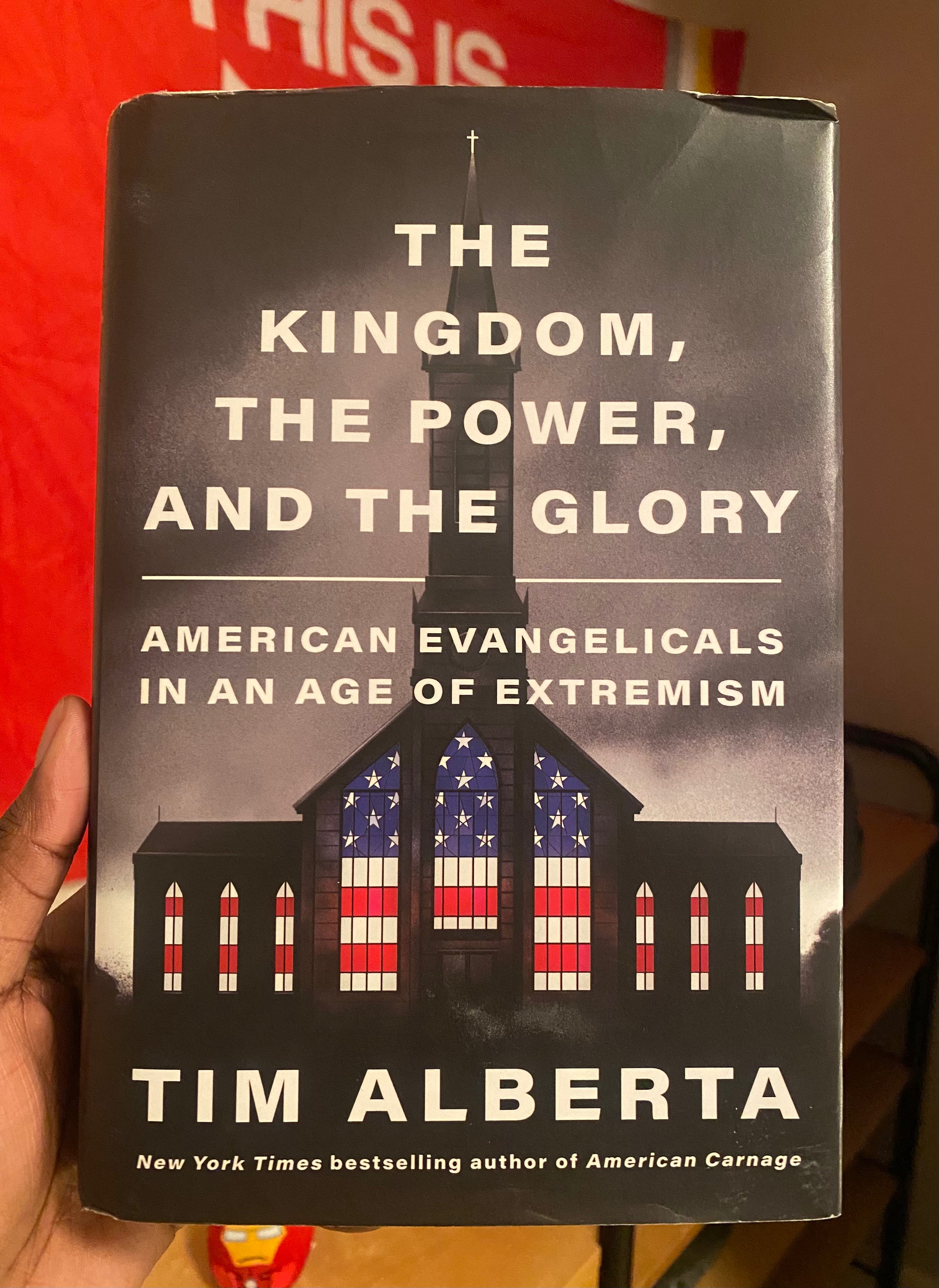
In the book, Alberta (a political reporter at The Atlantic who also happens to be a committed follower of Jesus), chronicles the advent of the movement known as the “Moral Majority” which enjoyed the peak of its influence on the United States’ political right wing in the 1980s. The movement’s leaders believed wholeheartedly that “Christ’s kingdom could be advanced only if American believers were willing to fight for it” (pg. 49).
Even though the movement had been dissolved by the 1990s, its ethos remains a powerful force on the American Right today. Alberta describes in vivid detail his experience at Road to Majority, for example, an annual symposium organized by the Faith and Freedom Coalition — one of the Moral Majority’s myriad modern heirs.
On the third day of the symposium, Alberta observed a Georgia pastor by the name of Jentezen Franklin rallying against those whom he described as the Church’s “enemies.” Numbered among these enemies were the “drag queens… invading children’s locker rooms.” Franklin explained that he wanted to make sure “the next generation of evangelicals continued fighting the culture war” (pg. 188).
I must admit that it was strange for me to read about Jentezen Franklin in this light when I first read The Kingdom, the Power, and the Glory in the summer of 2024. Franklin had been instrumental in my spiritual development as a teenager learning about key aspects of Christian spirituality — such as fasting and praying in the Spirit — for the first time. However, Alberta’s Pauline critique of Franklin and his ilk remains salient. In the words of the Apostle Paul himself as written down in 2 Corinthians 10:
We live as humans but do not wage war according to human standards, for the weapons of our warfare are not merely human, but they have divine power to destroy strongholds. We destroy arguments and every proud obstacle raised up against the knowledge of God, and we take every thought captive to obey Christ.
Paul recognizes that evil exists in our world and duly advocates for fighting back against it as Christians. However, he stresses that the weapons of our warfare are not conventional. While the conservative’s war often ends up being waged against the liberal (and vice versa), the Christian’s war ought to be waged primarily against the powers of darkness behind the evil in our world. As Paul explains, this time in Ephesians 6:
Our struggle is not against blood and flesh but against the rulers, against the authorities, against the cosmic powers of this present darkness, against the spiritual forces of evil in the heavenly places. Therefore take up the whole armor of God, so that you may be able to withstand on the evil day and, having prevailed against everything, to stand firm.
If we are to build Christ’s kingdom on the earth, we must focus on fighting the spiritual battles hiding behind the culture wars we perceive with our physical eyes. And the only way to fight said spiritual battles is through spiritual means. We ought to labour in prayer before doing so through politics — or even through pulpits, for that matter. Otherwise, we run the serious risk of serving earthly empires at the expense of serving God’s kingdom.