


I am Loki of Asgard
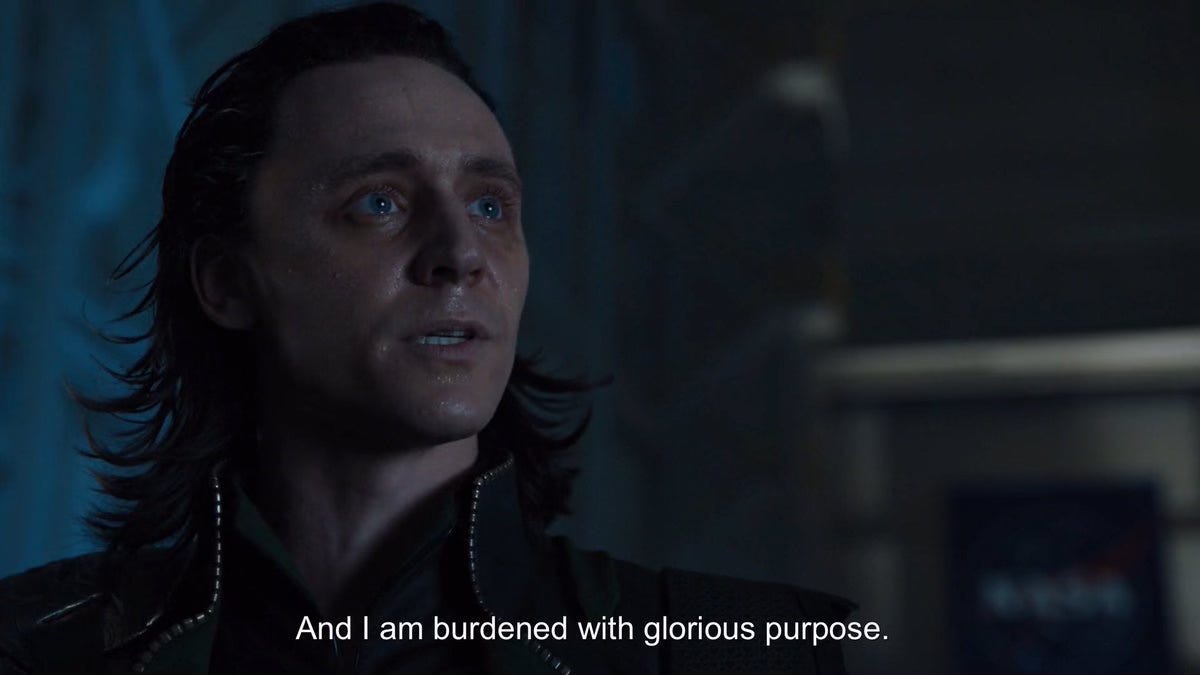
How did writing on the internet bring me to identify with one of the most notorious supervillains in comic book lore?
If you are anything like me, then you, too, have experienced what it is like to be so obsessed with a particular vision that everything else in your life — from relationships and work to proper sleep and nutrition — ends up taking a back seat to your all-encompassing pursuit of glorious purpose.
Ever since I became a Christian in 2010, I have witnessed an unrelenting war raging in my heart between my passion for God on the one hand and a drive for earthly accomplishment on the other.

In middle school, this drive manifested itself most clearly on the soccer field as I channeled my inner Premier League centre forward on sunny Friday afternoons in my native Rwanda (at least that’s what I thought I was doing). My love for the beautiful game would eventually be eclipsed by a love of theatre after I caught the acting bug in a high school production of “Beauty and the Beast.” I then went on to enrol at Trinity Western University as an acting major before switching into the school’s professional writing program two years later.
Seeking opportunities to put my writing degree to work post-graduation, I launched my Substack publication in October 2025. Though I did not know it at the time, this move was also the beginning of a new chapter in my lifelong struggle with disordered loving.
There is obviously nothing wrong with loving one’s craft. There is not even anything necessarily wrong with being ambitious vis-à-vis one’s practice thereof. However, as Clare Ashcraft argues in her essay, “I write for the internet. You shouldn’t trust me,” there is often much more than mere passion or ambition underlying an artist’s quest for excellence.
Loki’s a full-tilt diva. He wants flowers, he wants parades.

“I want to be true, pure, and clear,” Ashcraft writes, “but I want more fervently to be seen and to be loved.”
Her candid confession reminds me of the year I auditioned for a play at my alma mater — long after I had dropped my theatre major — simply because I had missed being on the receiving end of the opening night crowd’s love and adulation. Sure enough, I would return to the stage within the span of a semester, just in time to soak in the electric atmosphere once more.
While I do not regret my decision to come out of acting retirement for one last hurrah that fall, the thought process that led me to do it was an early indicator of my innate impulse toward garnering attention and affirmation through my art. This impulse, truth be told, has proven quite difficult for me to keep at bay in the seven months I have spent writing on Substack so far. As my friend Eddie LaRow admitted in a piece he recently wrote for Mere Orthodoxy:
We desire more followers. Desire more money. Desire to have the next break through article or post.
I must confess that the prospect of “making it big” — whatever that means — has all but captivated my imagination for much of this year. As many of us know all too well, however, the trouble with being captivated by any object wrongly desired over God’s face is that such things have a way of holding us captive before we even know it.
In his 1995 masterpiece, “Moving from Solitude to Community to Ministry,” Henri Nouwen shared some wise words for those of us who find ourselves in this predicament:
You have to listen to the voice who calls you the beloved, because otherwise you will run around begging for affirmation, for praise, for success. And then you’re not free.
The voice which calls us the beloved is, of course, the voice of our Heavenly Father—the One who “destined us for adoption as his children through Jesus Christ, according to the good pleasure of his will” (Ephesians 1:5 NRSV).
You are our son, Loki, and we your family.
I cannot help but wonder if Loki of Asgard, too — had he allowed himself to truly receive his adoptive parents’ love for him — could have avoided the emptiness which wound up fuelling his villain arc.
After all, when his brother confronts him about his genocidal machinations at the end of the first Thor movie, he reveals that he seeks “to prove to father that I am the worthy son.” In other words, he has succumbed to the very temptation Jesus overcame in the wilderness. To borrow again from Nouwen’s Solitude-Community-Ministry article:
“Prove you’re worth something.” “Prove you have any contribution to make.” “Do something relevant.” “Be sure you make a name for yourself.” “At least have some power—then people will love you; then people will say you’re wonderful, you’re great” …
These were the voices Jesus heard right after he heard “You are my beloved.”
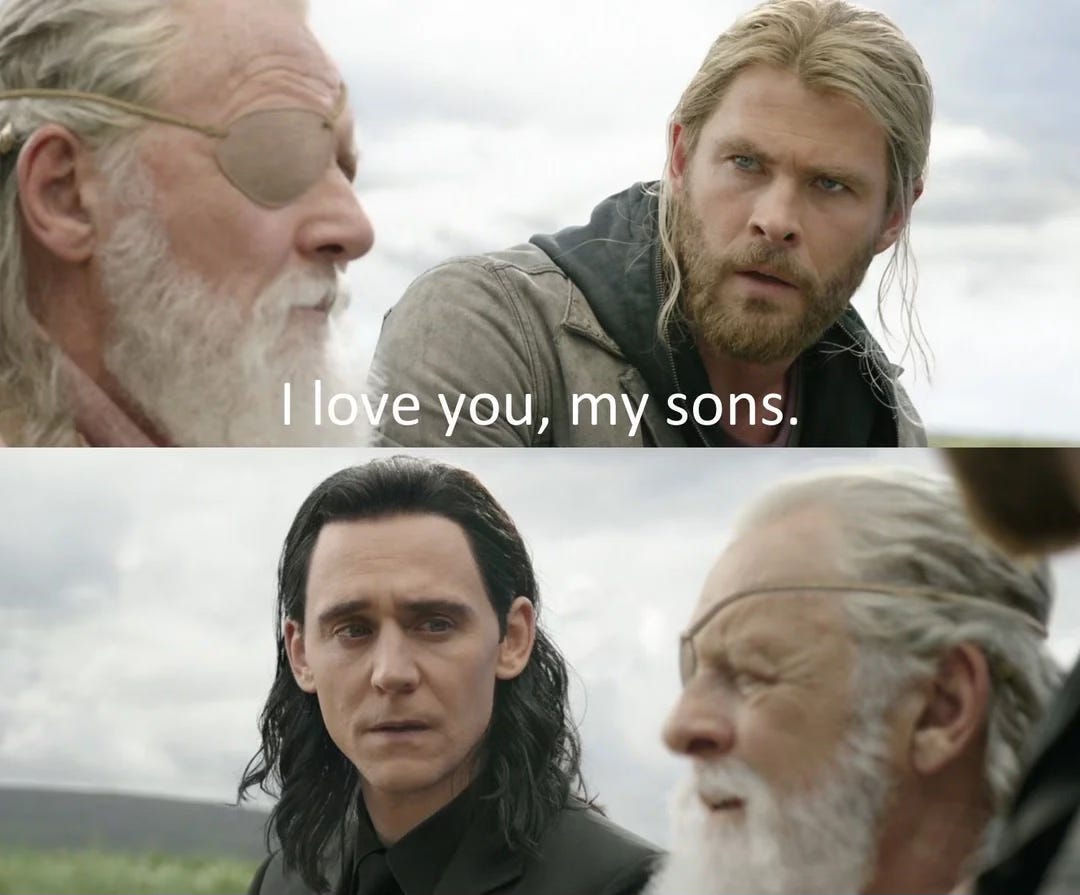
I may not be any worthier of carrying Thor’s hammer than Loki but, like him, I have a Father who has declared me worthy of His love all the same. Furthermore, like Jesus, I get to rest in my Father’s love—along with a multitude of brothers and sisters who, like me, “are carrying heavy burdens.” (Matthew 11:28).
It is precisely from this restful posture that I intend to keep writing without losing my soul.
Loved this! It is so important to remember we are validated and loved before everything else, and that all we do flows from that place of belonging!
I'm turning 64 in a month, and I still experience this war in my soul! Isaiah 50 helps me. God gave me that chapter at the darkest time in my life, and I hope to walk in that darkness until the day I go to Him-unless He chooses to shine on me. This is great work, Sacha! Thank you for the encouragement.